
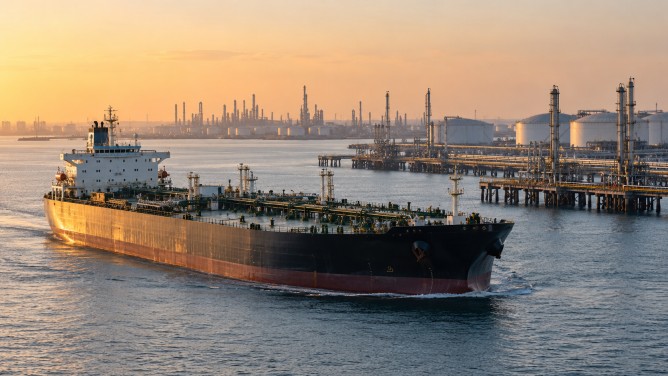
Oil prices have surged to a five-month high following escalating tensions in the Gulf region that threaten global supply stability. On Thursday, Brent crude rose by 3% to $112 per barrel, marking its highest point since May 18. The increase comes in the wake of attacks in Saudi Arabia and incidents involving vessels near the critical Strait of Hormuz, raising fears of further disruptions.
The situation intensified as Yemen’s Houthi movement launched attacks on Saudi Arabian targets, reportedly resulting in four deaths and eight injuries, including incidents at a civilian airport in Dammam and an oilfield hit by drones. Concurrently, Iran’s Islamic Revolutionary Guard Corps claimed responsibility for striking four vessels in the northern Gulf over alleged illegal oil transfers. Additionally, three other vessels reportedly encountered mines west of the Strait of Hormuz, with Iran warning of potential broader responses to provocations involving US regional bases.
These developments have reignited concerns about the security of the Strait of Hormuz, one of the world’s most crucial energy shipping lanes. While earlier disruptions had pushed crude prices to $126 per barrel in April, a subsequent decline followed amid hopes for a ceasefire. However, the renewed hostilities have cast doubt on the stability of global oil supplies.
The impact of rising oil prices extends beyond the energy sector, affecting financial markets worldwide. On Thursday, major European and Asian stock indices fell amid fears that increased energy costs could exacerbate inflation and maintain high borrowing costs. In the United States, American Airlines shares dropped after the company warned that elevated fuel expenses might lead to a financial loss this year, illustrating the broader economic implications of the oil price surge.
Despite oil exports from the Persian Gulf recovering above pre-conflict levels, efforts to offset shipping disruptions through increased pipeline shipments to the Red Sea and Gulf of Oman have been challenged by the recent attacks. As the situation continues to unfold, the global market remains on edge, closely monitoring developments in the volatile Gulf region.