
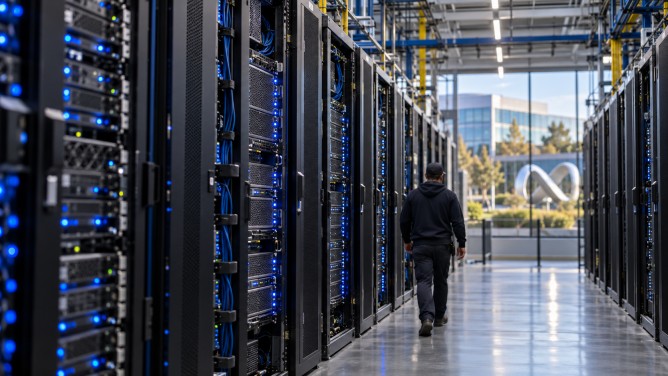
Meta Platforms has unveiled plans to raise $95 billion through stock offerings to bolster its artificial intelligence (AI) infrastructure investments. The move marks a significant step in Meta’s strategy to enhance its data centers and computing capacity, crucial for the development of advanced personal AI systems.
The fundraising initiative will occur in two phases. Initially, Meta aims to generate $35 billion via an underwritten public stock offering. Notably, major chipmakers such as Nvidia, AMD, and Broadcom have shown interest in participating, potentially purchasing up to $5 billion worth of shares collectively. Following this, Meta plans a $60 billion at-the-market offering, allowing shares to be sold at prevailing market prices over time. This offering will introduce a new class of non-voting Class C shares, ensuring that CEO Mark Zuckerberg retains his voting control over the company.
This announcement arrives amidst growing concerns regarding the financial stability of smaller AI infrastructure providers, particularly those known as neoclouds that lease computing power to AI businesses. Tesla and SpaceX CEO Elon Musk has warned that over 200 such companies could encounter significant challenges, potentially leading to industry consolidation as financing becomes increasingly scarce. Musk attributes this pressure to tightening debt markets and the reliance of these companies on AI data center revenue, which has led to declines in the shares of several infrastructure providers.
Investors are now questioning whether the demand for AI computing will rise sufficiently to justify the substantial borrowing undertaken by data center operators. For instance, CoreWeave has accumulated notable debt while expanding its infrastructure to meet AI developers’ needs.
Analysts indicate that Meta is better positioned to finance its expansion due to its established revenue streams and access to equity markets. In contrast, smaller infrastructure firms face greater financial risks should AI demand not meet expectations. This scenario underscores a growing divide in the AI industry, where major tech companies continue heavy investments in infrastructure, while smaller providers grapple with increasing pressures over debt, funding, and long-term viability.