
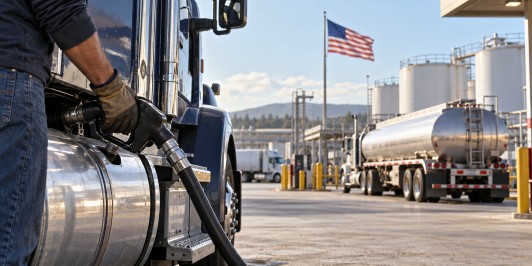
As the United States grapples with record-high diesel prices, the Trump administration is contemplating a 90-day ban on diesel exports to boost domestic supply and potentially ease the financial burden on consumers. This proposed export ban aims to retain more diesel within U.S. borders, theoretically increasing availability and reducing prices domestically. However, experts caution that the measure might not significantly impact prices due to various logistical and market challenges.
One of the critical issues underpinning this situation is the uneven distribution of diesel supplies across the country. The majority of U.S. refining capacity is located along the Gulf Coast, while shortages are being reported in the Northeast and West Coast regions. The existing pipeline infrastructure is already near capacity, complicating efforts to transport additional diesel to these areas. Alternatives such as water transport could help, but they are costlier and slower, potentially negating any price relief anticipated from the export ban.
Furthermore, the U.S. diesel market is closely tied to global fuel prices and supply conditions. With international prices often higher, U.S. refiners have financial incentives to export fuel. Recent global energy disruptions, such as those linked to conflicts involving Iran and attacks on Russian refining capabilities, have exacerbated supply pressures, further influencing diesel prices.
The United States has previously resorted to export restrictions during energy crises, notably after the Arab oil embargo in the 1970s, although such measures were eventually phased out as domestic production increased. The potential reintroduction of a temporary diesel export ban could offer short-term domestic supply gains, but its success hinges on factors like refinery production rates, transportation logistics, regional demands, and ongoing global price dynamics.
Ultimately, while the proposed export ban might marginally increase diesel supply within the U.S., it is unlikely to resolve the broader pricing and supply challenges in the diesel market. The interplay of domestic logistical constraints and global market forces suggests that any relief from such a policy would be limited and complex.