
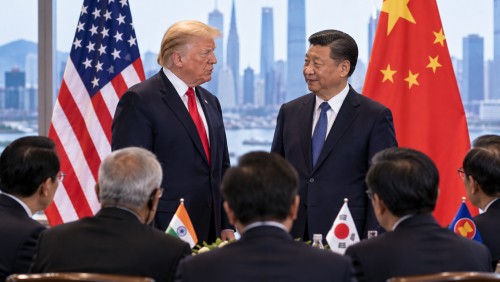
The potential impact of the Trump-Xi meeting on Taiwan is a concern for US allies in Asia, with regional security and economic stability at stake. As discussions between US President Donald Trump and Chinese President Xi Jinping approach, Taiwan, Japan, and other nations are wary of any shifts in Washington’s policy that might affect the delicate balance in the region.
Taiwanese officials have been proactive, voicing their apprehensions to US counterparts, especially since they anticipate that President Xi will bring up Taiwan during the talks. The island, which operates with a degree of autonomy, is at the center of a longstanding geopolitical issue. Washington’s current policy acknowledges Beijing’s stance that Taiwan is part of China, but without endorsing it, maintaining unofficial relations and defense cooperation with Taiwan instead.
Japan is similarly focused on the upcoming summit, advising the US to maintain its existing diplomatic language regarding Taiwan to prevent escalating tensions. Tokyo is eager for communication between Prime Minister Sanae Takaichi and President Trump to ensure that Japan’s concerns are also taken into consideration.
A central issue under discussion is the proposed US arms package for Taiwan, which President Trump had previously suggested could serve as a bargaining chip in negotiations with Beijing. This arms deal, still pending approval, is a contentious point, with China strongly opposing any US arms sales to Taiwan, viewing such actions as interference in its territorial claims.
While the meeting between Trump and Xi is expected to focus primarily on economic relations between the US and China, the implications for Taiwan remain significant. The outcome could influence not only regional security but also global semiconductor supply chains, which are crucial for the technology industry worldwide.