
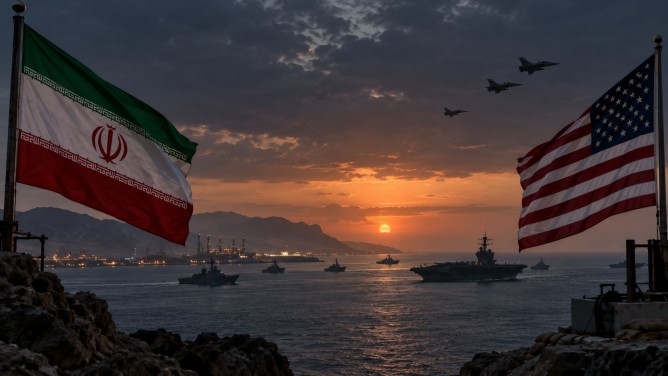
Heightened tensions between Iran and the United States are escalating fears of broader conflict in the Middle East, with potential impacts on global energy markets and regional security. As U.S. President Donald Trump warns Iran of severe consequences if it refuses to negotiate, the stakes for international commerce and political stability are rising. Iran’s military, in response, has threatened retaliation against U.S. bases and interests in the region, further raising the specter of military confrontation.
Amid these tensions, President Trump has expressed a willingness to engage in direct talks with Iranian President Masoud Pezeshkian at the United Nations General Assembly in New York. This potential diplomatic opening comes as Tehran links negotiations to the reopening of the Strait of Hormuz, a critical chokepoint for the world’s oil supply. The ongoing confrontation continues to ripple through the global economy, contributing to fluctuating energy prices.
Meanwhile, the conflict is spreading across the region, with Yemen’s Houthi movement claiming responsibility for missile and drone attacks on Saudi targets, including an oil facility in Yanbu and locations in Riyadh. Saudi Arabia reports its air defenses intercepted a missile aimed at Riyadh and managed to thwart additional attacks. These developments underscore the increasing risk to regional security and the potential disruption of energy supplies.
The Houthi attacks have heightened concerns about the safety of commercial shipping lanes, particularly around Yemen’s Red Sea coast and the Bab el-Mandeb Strait. Coupled with the restrictions around the Strait of Hormuz, these risks are placing additional pressure on global energy markets. Although oil prices saw a slight easing on September 21 due to prospects of renewed diplomacy and partial recovery in Saudi exports, the situation remains precarious.
As the United States and Iran continue to exchange threats, the international community watches closely, wary of the broader implications for peace and economic stability in the Middle East. The unfolding situation demands careful navigation to avoid further escalation and to explore diplomatic solutions that could ease the tension and stabilize the region.