
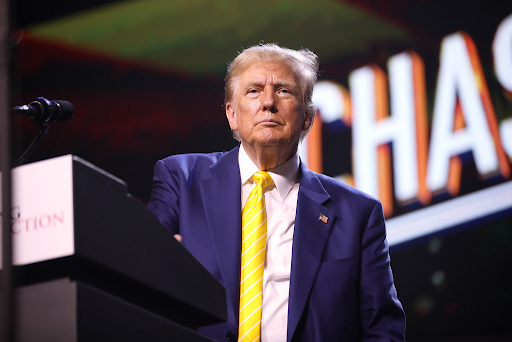
The ink was barely dry on the Supreme Court’s ruling against his tariff policy when President Trump announced a new and even higher tariff on Saturday, signaling that his administration views the court’s decision not as a check on executive power but as an invitation to find a new and more durable path to the same destination.
Trump invoked Section 122 of the Trade Act of 1974, which allows tariffs of up to 15% for 150 days without congressional approval, to impose the new rate on all global imports. He described it as effective immediately and pledged that his administration would use the 150-day window to develop legally sound, permanent tariff policy. No president has ever previously used this provision.
The Supreme Court’s 6-3 ruling on Friday found that Trump’s IEEPA-based tariffs required congressional authorization he had not obtained. Trump called the decision “ridiculous, poorly written, and extraordinarily anti-American,” and followed it with unusually personal attacks on the majority justices. He called his own nominees Barrett and Gorsuch “an embarrassment to their families,” suggested they were “barely” invited to the State of the Union, and praised dissenters as patriots.
European partners expressed deep concern. Germany’s Chancellor Merz described the constant tariff volatility as economic poison and pledged to bring a unified European position to Washington. France’s Macron celebrated the court’s ruling as evidence of healthy democratic governance and called for trade built on reciprocity rather than unilateral decisions. The UK, previously holding a 10% deal, now faces the new 15% baseline with unclear options.
With approximately 90% of the $130 billion in tariffs already collected paid by American businesses and consumers, the new rate will further strain domestic finances. Exemptions apply to critical minerals, metals, pharmaceuticals, and USMCA-compliant goods. Sector-specific tariffs on steel, aluminum, lumber, and autos continue under separate legal authority.