
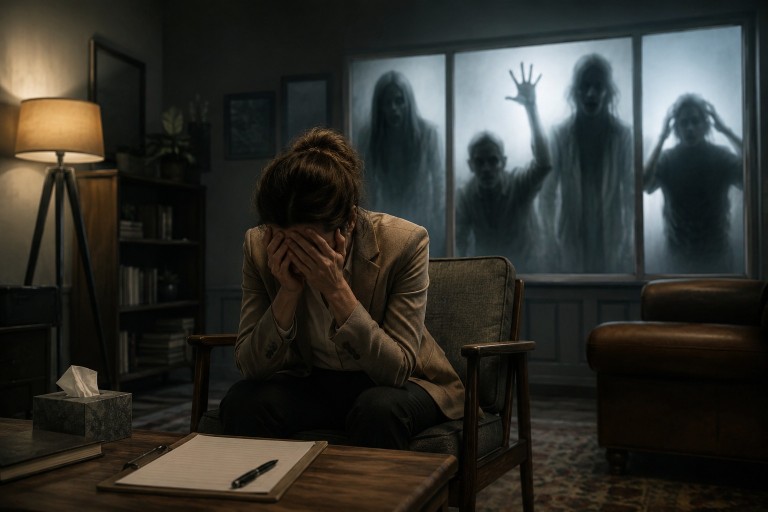
In a notable shift within horror and psychological cinema, therapists are increasingly depicted as complex, vulnerable characters grappling with their own emotional challenges. This trend mirrors a broader societal discourse on mental health, emphasizing that therapists, too, navigate personal struggles. Recent films like “If I Had Legs I’d Kick You,” “Smile,” “Backrooms,” and “A Private Life” showcase therapists as central figures in narratives filled with trauma, fear, and psychological turmoil, challenging the conventional portrayal of them as infallible guides.
Historically relegated to supporting roles that offer sage advice, therapists in these films are now at the forefront, with their emotional stability scrutinized as they endeavor to assist others. This evolution in storytelling aligns with a growing acceptance and discussion of therapy in mainstream culture. As more individuals seek mental health support and social media platforms facilitate open conversations about therapy, filmmakers are inspired to depict therapists as ordinary individuals rather than idealized professionals.
Many of these movies utilize elements of supernatural or psychological horror to delve into the internal conflicts of therapists, exploring issues such as anxiety, burnout, and unresolved trauma. By presenting therapists as human rather than infallible, these narratives illuminate the pressures faced by mental health professionals and challenge traditional stereotypes associated with the profession.
The increased visibility of therapy in everyday life has prompted filmmakers to craft stories that resonate with contemporary audiences. By placing therapists in the midst of unsettling tales, the films not only engage viewers but also contribute to a more nuanced understanding of the mental health profession. Through these portrayals, audiences are encouraged to appreciate the complexities and emotional demands faced by those who dedicate their lives to helping others.