
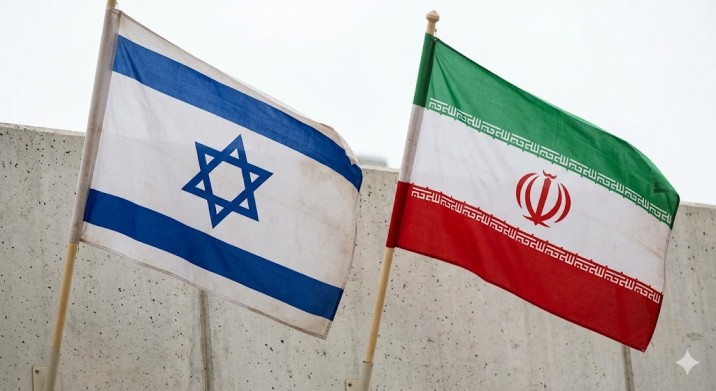
On Monday, renewed military confrontations between Israel and Iran threatened to destabilize a fragile ceasefire established on April 8, raising the specter of an expanded conflict across the Middle East. The Israeli Defense Forces launched airstrikes on various targets within Iran following missile attacks directed at northern Israel by Iranian forces. These exchanges marked the first direct confrontation since the truce took effect.
Explosions were reported in several Iranian cities, including Tehran, Isfahan, Karaj, and Tabriz. The Israeli military stated that its strikes focused on military installations and air defense systems across Iran, including a petrochemical site. In response, Iran’s Islamic Revolutionary Guard Corps (IRGC) launched missile attacks on two Israeli military bases, naming the operation “Nasr,” or “Victory.” While Israel managed to intercept several of the missiles, explosions were nevertheless heard around Jerusalem, and some damage was reported in a West Bank settlement, though no injuries occurred.
The escalation comes amid mounting tensions surrounding diplomatic efforts for a broader peace agreement. Iranian officials accused the United States of either being complicit in or supporting Israel’s military actions, cautioning that such attacks could jeopardize ongoing diplomatic talks. Meanwhile, Yemen’s Houthi movement revealed it had launched a missile attack targeting Israel and announced a blockade on Israeli-affiliated shipping in the Red Sea, heightening fears of potential disruptions to one of the world’s key maritime trade routes.
The conflict’s intensification also had immediate repercussions on global markets. Brent crude oil prices rose by $3.50, reaching $96.59 per barrel, as stock markets across Asia experienced declines. The shifts reflect growing concerns over potential disruptions to energy supplies and the stability of the region.