
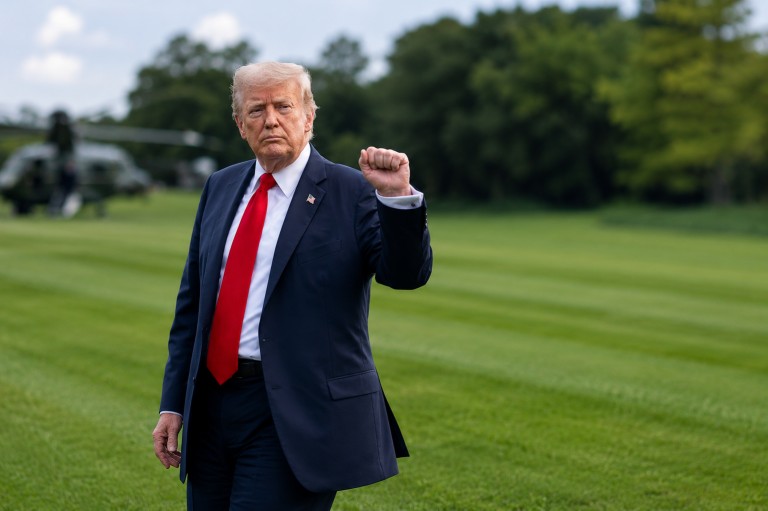
In a surprising announcement, former U.S. President Donald Trump declared plans to bolster American military presence in Poland by deploying an additional 5,000 troops. This decision comes on the heels of a previous directive aimed at reducing U.S. forces across Europe, including halting the rotation of military personnel between Poland and Germany. The initial withdrawal plan had stirred unease among NATO allies, who were concerned about the implications for long-term security in Europe.
The abrupt policy shift has left both NATO members and U.S. defense officials perplexed, as they had already started adjusting their military strategies in response to the original troop reduction directive. Trump’s decision to increase troop numbers in Poland is attributed to strong bilateral relations with Polish President Karol Nawrocki, yet it has introduced a layer of unpredictability regarding U.S. military commitments in the region.
European leaders have expressed a sense of uncertainty about the future of U.S. military deployments on the continent, especially in light of ongoing tensions with Russia due to the conflict in Ukraine. The fluctuating stance from Washington has prompted NATO members to closely monitor the situation, as they seek clarity on America’s evolving global military posture.
U.S. Secretary of State Marco Rubio noted that America’s allies are aware of the ongoing review of the United States’ global military deployment strategy. Rubio suggested that despite the current plans, the number of U.S. troops in Europe might still decrease over time. Presently, the U.S. maintains approximately 80,000 military personnel stationed throughout Europe.
NATO Secretary-General Mark Rutte has underscored the necessity for European nations to enhance their own defense capabilities, even as they continue to rely on U.S. support. As NATO officials engage in ongoing discussions about defense strategies and troop commitments along the alliance’s eastern borders, the focus remains on reinforcing security in the face of potential threats.